
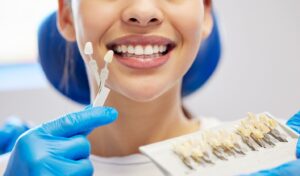
Dental veneers are now one of the most popular cosmetic dentistry treatments for improving the appearance of teeth. These thin coverings can address discoloration, chips, minor imperfections, and other cosmetic concerns. But veneers have come a long way since their beginnings nearly a century ago. Here’s a look at how dental veneers evolved from a temporary Hollywood solution into a modern, durable cosmetic treatment.
1928: The Hollywood Smile Begins
The story of modern veneers begins in 1928 with California dentist Charles L. Pincus. Working during Hollywood’s golden era, Pincus developed thin acrylic coverings that could temporarily be placed over actors’ teeth to improve their smiles while they were on camera.
These early veneers were primarily cosmetic and weren’t designed for long-term use. They were often attached temporarily with denture adhesive, meaning actors could achieve a picture-perfect smile for filming without permanently altering their teeth. Most stars threw them away right after a scene was finished!
Mid-20th Century: Better Adhesion
One of the biggest challenges with early veneers was keeping them securely attached to the teeth. Advances in dental materials and bonding technology eventually made it possible to create restorations that could adhere more reliably to enamel.
The development of dental bonding techniques in the 1950s and subsequent improvements helped pave the way for veneers that were more practical outside of Hollywood.
1980s: Porcelain Veneers Take Off
A major turning point came during the 1980s, when researchers and dentists developed more predictable methods for bonding porcelain to tooth enamel. Porcelain offered important advantages over the acrylic materials used in early veneers. It was stronger, more stain-resistant, and capable of closely mimicking the appearance of natural enamel.
As bonding techniques improved, porcelain veneers became increasingly popular among patients who wanted to improve their smiles.
Modern Veneers: Precision and Personalization
Today’s veneers are far more sophisticated than their early predecessors. Dentists can use digital imaging, digital smile design, and advanced dental laboratory technology to carefully plan the size, shape, color, and placement of veneers.
Modern porcelain and ceramic materials can provide a highly natural appearance while offering improved durability. Depending on the patient’s needs, dentists may also recommend minimal-prep or no-prep veneers in appropriate cases.
Veneers aren’t right for everyone, however. A dentist should evaluate your teeth, gums, bite, and overall oral health before recommending treatment.
From temporary acrylic coverings created for Hollywood actors to today’s highly customized porcelain restorations, dental veneers have undergone remarkable changes since 1928. The goal has remained surprisingly consistent: creating a more attractive smile. What’s changed is the technology, materials, and precision available to dentists and patients.
About the Practice
Killeen Choice Dental in Killeen, TX is happy to help our patients achieve the smiles of their dreams with veneers. Drs. Daood Alvi and Talal Altaher have advanced training in cosmetic dentistry and will ably handle your treatment with kindness and compassion, from the initial consultation to final placement. Ready to schedule your appointment? Head to our website or call (254) 220-4422.